The "Safest Business" in America Is About to Get a Lot More Competitive
Billions are pouring into the insurance brokerage sector at the same moment rising healthcare costs and AI are forcing benefits advisors to expand what they deliver.

This month’s story focuses on a fascinating contradiction unfolding in employee benefits.
From the outside looking in, the insurance brokerage industry looks like one of the most attractive sectors of the economy.
Aon just agreed to acquire USI for $17 billion, one of the biggest transactions in the industry's history. Shortly after, The Baldwin Group announced a $7.7 billion take-private led by Sequence Holdings and Michael Dell's family office.
But, when you zoom in to the service-team level, the picture looks very different.
Benefits teams are walking into another brutal renewal season. Medical costs keep climbing. Specialty pharmacy spend is rising. Large claims are getting more frequent and more severe. And, employers are being forced into increasingly difficult conversations about how much more cost they can absorb.
Both dynamics are accelerating at the same time.
That combination could reshape this industry faster than most people expect.
Why the money keeps coming

The USI transaction is an exclamation point on years of brokerage consolidation.
KKR first invested in USI in 2017 when the company was valued at roughly $4.3 billion. Aon is now buying it for $17 billion.
KKR says its original investment will generate roughly six times the money it put in. During its ownership, USI nearly tripled its revenue, doubled its workforce and completed more than 90 acquisitions.
KKR’s grand slam success with USI will be hard for other major investment firms to ignore.
The insurance brokerage business has many of the characteristics investors want. Revenue is recurring. Client relationships can last decades. The underlying need is durable.
Sophisticated investors are still sitting on enormous stockpiles of capital at a time when obvious home-run opportunities are becoming harder to find.
Insurance increasingly looks like one of them.
A different kind of buyer just showed up
The Baldwin deal is interesting for a different reason.
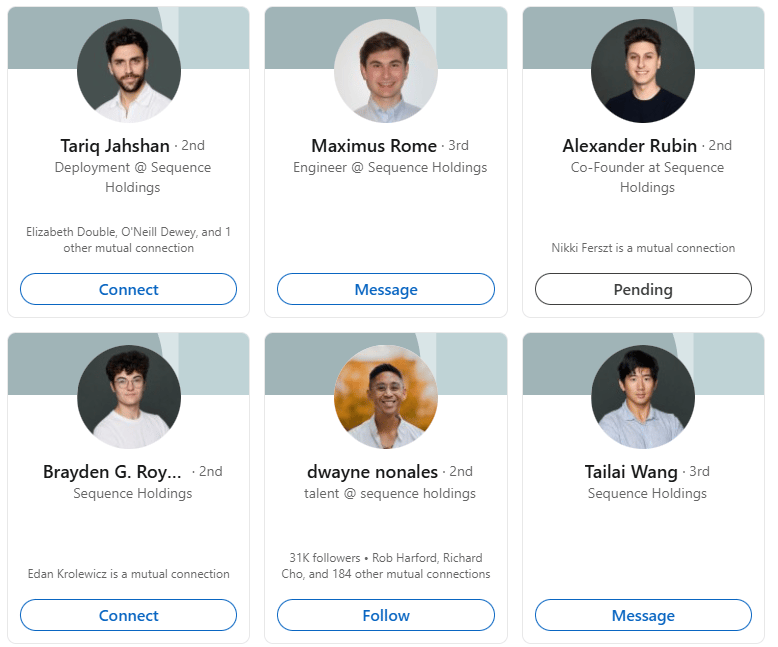
Dell’s Family Office put up the money to buy Baldwin, but the new management team is a startup company called Sequence Holdings.
Sequence is not a traditional insurance operator. Its stated strategy is to buy established businesses and rebuild them with AI at the center of how they operate.
Their team is made up of 20-something year old engineers who came from Apple, Palantir and Tesla, alongside finance talent from places like Goldman Sachs and Blackstone.
These are highly caffeinated people: long on ambition, short on insurance experience and deeply AI-pilled. And they are now being put in a position to help call the shots at a $7 billion insurance brokerage.
That is a combination this industry has rarely seen before.
Historically, outside capital came into brokerage with a fairly familiar playbook: buy firms, consolidate operations, improve margins and keep acquiring. Sequence appears to be asking a more fundamental question: what would an insurance brokerage look like if you rebuilt the operating model around AI from the ground up?
They will almost certainly get many assumptions wrong. Industry experience exists for a reason. Elon’s failed DOGE experiment comes to mind.
But that is almost beside the point.
A new class of competitor is entering the market with enormous capital, elite technical talent and very few attachments to the way insurance has traditionally been run. For an industry that has often evolved incrementally, that is a very different kind of threat.
Meanwhile, the ground floor is getting harder
The irony is that all this capital is arriving while the actual job of serving benefits clients is getting more difficult.
The drivers are stacking up.
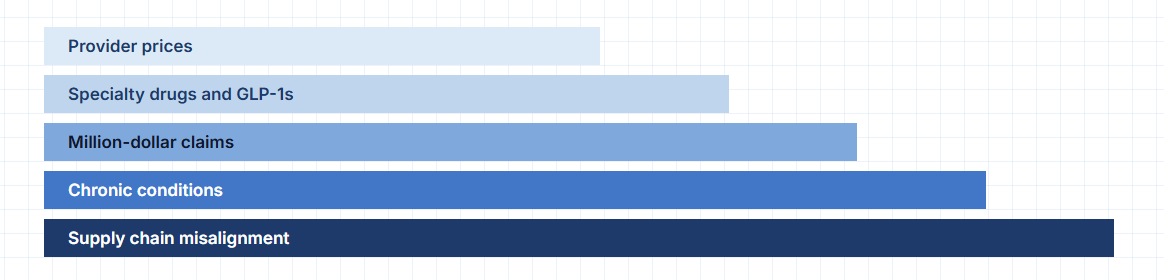
Hospital and provider prices continue rising. Expensive specialty drugs and GLP-1s are adding new pharmacy pressure. Million-dollar claims are becoming more common. Cancer, cardiovascular disease and musculoskeletal conditions continue driving large portions of plan spend.
There are also structural problems across the healthcare supply chain. Hospitals facing reimbursement pressure in other parts of their business can shift more costs toward commercial plans. Incentives between providers, carriers, PBMs and other intermediaries are often poorly aligned.
For employers, it all shows up in one place: the renewal.
Historically, many organizations were accustomed to increases in the high single digits or low teens. Today, we are regularly hearing about renewals in the 20% to 30% range, and this comes after an already difficult year.
A 7% renewal can often stay inside the normal benefits renewal process.
A 25% renewal gets the CFO’s attention and can reach the CEO, executive team or board.
And once that happens, the questions change.
Are we doing everything possible to control this? Should we change our funding strategy? Are there different vendors we should consider? Is our broker bringing us enough ideas? Do we have the right trusted advisor for what comes next?
Every difficult renewal creates more scrutiny on the broker relationship.
Brokerage is expanding beyond benefits

You can already see how firms are responding.
Alliant recently acquired Nava, a benefits brokerage built around a modern technology platform and a more digitally enabled service model.
HUB acquired HCM Unlocked to expand further into HR consulting and outsourced HR services.
Just talking benefits was already becoming a risky strategy as competitors expanded into HR technology, compensation, outsourcing and broader consulting.
In this environment, it is becoming untenable.
When a client is staring at a 20% or 30% renewal, managing the renewal well is no longer enough to preserve the relationship. Brokers need other ways to help clients think through strategy, solve operational problems and run the business better.
If they cannot offer that broader value, a painful renewal becomes the perfect moment for the client to start asking who else can.
The next five years
Step back and look at what is happening all at once.
Some of the largest investors in the world are looking at insurance brokerages and seeing a safe place to earn attractive returns.
That is going to bring more money into the space, but it is also going to bring a different kind of competitor. Sequence is a good example. The people now helping shape the future of Baldwin include AI-native engineers who did not grow up in insurance and have very few preconceived notions about how a brokerage is supposed to operate.
At the same time, the actual job of being a benefits broker is getting harder. Employers are absorbing renewal increases that put real pressure on their businesses. They need more creativity, more strategic guidance and more help finding efficiencies elsewhere in their people operations.
That leaves brokers stuck in the middle. They have to help clients navigate one of the most difficult benefits environments in recent memory while defending those relationships from a competitive set that keeps expanding.
The threat is no longer just the brokerage down the street or a national firm. It is PEOs, payroll companies moving into benefits, AI-native brokerages, ICHRA firms with billion dollar valuations, and competitors we probably have not seen yet.
The employee benefits industry has long been criticized for being insular, slow-moving and resistant to change. Whether or not that reputation was ever fair, the luxury of moving slowly is disappearing.
Capital has its sights set on this industry. New operators are arriving with elite talent, AI-centric technology and fresh business models.
If the last five years of consolidation and expansion felt like a lot of change, I suspect they will look tame compared with the next five.
.png)
