Do I Need a Consultant for My HRIS Implementation?
Not every HRIS implementation needs a consultant. Learn how data quality, internal bandwidth, process clarity, and platform experience determine whether outside implementation support is worth it.

Key Takeaways
- You need a consultant for your HRIS implementation when your data is messy, your processes are unclear, your team is stretched thin, or the platform is new to you. When all four are in good shape, you can often run it with your vendor alone.
- Your vendor configures the software. It will not clean your data, decide your processes, or project-manage your side of the work.
- Data is where most timelines slip: up to 60% of data migration projects run late or over budget, and vendors expect you to hand over clean records.
- Unclear processes stall configuration, because a vendor can build the system ten ways and will ask you to pick the right one.
- A consultant is worth it when the risk to your go-live is real. For a clean, well-run, tech-savvy team on a simple rollout, it is often an expense you can skip.
"Do I need a consultant for my HRIS implementation?" is one of the most useful questions a buyer can ask, because the honest answer is not always yes.
Some teams get through implementation with only their vendor's help.
Others fall weeks behind, burn out their HR staff, and go live on a system nobody trusts.
The difference usually comes down to four things you can assess before you spend a dollar.
This guide gives you a straight way to tell which kind of project you have.
The Short Answer
You need an HRIS implementation consultant when messy data, unclear processes, thin bandwidth, or an unfamiliar platform put your timeline and go-live at risk.
You can often skip one when your employee data is clean, your processes are documented, your team has real hours to give the project, and you are comfortable configuring software.
Most implementations sit somewhere in between, which is why it helps to look at each factor on its own rather than guess.
A consultant is not a badge of a hard project or a waste on an easy one. It is a specific answer to specific gaps.
What Does an HRIS Implementation Actually Involve?
An HRIS implementation is the work of moving from a signed contract to a live system your team uses with confidence.
That work usually includes configuring the platform to your policies, migrating employee and historical data, integrating payroll and other systems, testing, running parallel payroll, training people, and cutting over at go-live.
A mid-market rollout typically runs three to six months, while large enterprise deployments stretch beyond a year (Paycom).
None of it is only a software task.
Most of the effort is decisions and data on your side, which is exactly why bandwidth, data, and process clarity decide how hard your project will be.
The Four Questions That Decide Whether You Need One
Four factors separate the teams that can self-implement from the teams that need help.
Be honest with yourself on each. The more that land on the right-hand side of this table, the stronger the case for bringing someone in.
Bandwidth: does your team have the hours?
Implementation is a second job laid on top of everyone's first one.
Teams with slack can absorb that. Teams already running flat out tend to fall behind, and a slipped timeline is the most common way a rollout goes sideways.
If your HR staff cannot name the hours they will protect for this each week, that gap alone can justify a consultant who carries the project management.
Data: is your employee data clean?
Data is where most implementations lose time, and it is the part vendors expect you to own.
Up to 60% of data migration projects run late or over budget (OutSail), usually because records were messier than anyone admitted at kickoff.
Your vendor will load the data you give it. It will not comb your spreadsheets for duplicates, fill missing fields, or reconcile years of payroll history. That cleanup is yours, and it is slow, detailed work.
Clean data is the single best predictor of a smooth self-implementation. Messy data is the single biggest reason to get help.
Process: are your workflows clear?
A new system forces every fuzzy process into a concrete decision.
Here is the pattern Brett Ungashick, OutSail's founder, sees again and again: a vendor tells a buyer, "I can set this up ten different ways. You need to tell me the best way."
If your team can answer that quickly and consistently, configuration moves fast. If the answer changes depending on who you ask, the project stalls while you sort out how you want to work.
Agreeing your processes before they are built is the kind of readiness SHRM treats as part of any HR technology purchase. A consultant earns their fee here by bringing a default playbook, so you choose from proven options instead of inventing process under deadline.
Platform familiarity: is your team tech-forward?
Some teams are comfortable inside HR software and pick up a new platform quickly.
If yours has configured systems before, reads documentation without flinching, and enjoys the setup, you can lean on the vendor's implementation team and do fine.
If the platform is unfamiliar and no one has done this before, a consultant who lives inside your exact system (Workday, UKG, Dayforce, ADP, and the like) turns weeks of trial and error into days.
What Your HRIS Vendor Will and Won't Do
Your vendor's implementation team configures the software. It does not run your project or make your decisions for you.
That distinction catches a lot of buyers off guard, so it is worth being blunt about it.
Your vendor will:
- Configure the platform to the choices you give it.
- Load the data you hand over in the format it asks for.
- Run standard testing and walk you through go-live.
Your vendor won't:
- Clean or reconcile your employee and payroll data.
- Decide the best process for you, or tell you which of ten setups is right.
- Project-manage your side, chase your internal deadlines, or protect your timeline.
Read that second list again, because it maps exactly onto the four factors above.
The gaps a vendor leaves open are bandwidth, data, and process, which is precisely what a good implementation consultant fills.
So, Do You Need a Consultant? A Simple Rule
If all four factors are green, work directly with your vendor and keep the money.
If even one is clearly red, and especially if it is data or bandwidth, the cost of a consultant is usually smaller than the cost of a blown timeline, a botched migration, or a system your people quietly refuse to use.
The point of a consultant is not to do what the vendor already does. It is to cover the work the vendor never will.
What Does an HRIS Implementation Consultant Actually Do?
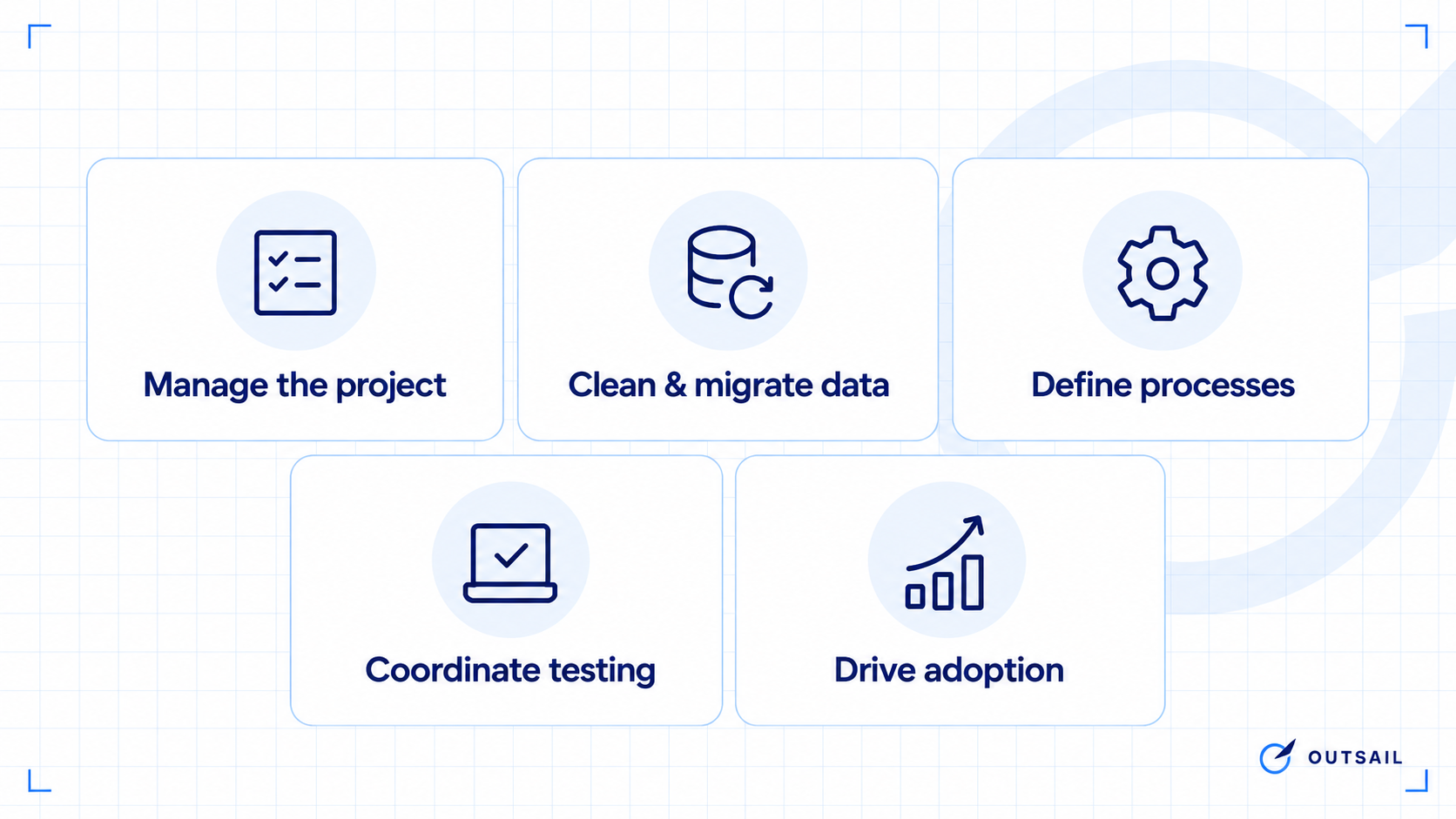
An HRIS implementation consultant runs the parts of the project your vendor won't.
In practice that means project-managing your side to the timeline, leading data cleanup and migration, helping you settle on processes before they are built, coordinating testing and parallel payroll, and driving adoption so the system gets used after go-live.
The best ones specialize by platform, so they arrive already knowing your system's quirks instead of learning them on your budget.
This is different from an implementation partner tied to one product. A consultant works for your outcome, not the platform's. For the fuller picture of consultant types, vetting, and consultant matching, start with the HR technology consulting guide.
Is Implementation Help Worth the Cost?
Implementation help is worth it when the cost of getting it wrong is larger than the fee, which is often the case once data or timelines are at risk.
Cost tracks the engagement model and scope, not a single rate. A short data-migration rescue costs far less than a fully managed rollout.
Keep this number separate from your software cost. Enterprise platforms like Workday and SAP SuccessFactors frequently require a third-party implementation partner on top of the license, and that is a budget line of its own.
Where matching helps: because OutSail negotiates through established network relationships, matched engagements are often priced below what a firm quotes a cold inquiry.
How Can OutSail Help With Your HRIS Implementation?
OutSail is an independent HR technology advisory firm built to help mid-market companies choose, implement, and get real value from the systems that run HR.
Brett Ungashick and the OutSail team specialize in HR technology advisory, HRIS selection, and consultant matching – working alongside your team so a rollout lands on time and gets adopted, not just switched on.
OutSail helps you make the consultant call without a sales pitch, then finds the right help only if you need it. From picking the right platform to cleaning the data and matching the right specialist for the project, the focus is on outcomes at every stage, so HR and finance leaders get clear visibility into what a system will cost, what it will take to implement, and where the risks sit.
The guidance is independent by design. Vendors pay a commission only when a client buys, and every vendor pays a similar rate, so roughly 90% of clients never pay a cent for the core selection service and the advice stays on the buyer's side.
We know that a blown timeline or a system your people avoid is real money lost. Every recommendation we make points at one outcome – an implementation that goes live cleanly and earns its keep.
Meet the Founder of OutSail
Meet the founder and CEO of OutSail – Brett Ungashick:
- As founder and CEO of OutSail, Brett brings years of hands-on experience in HR technology selection, implementation, and negotiation, drawn from advising 1,500+ organizations on their HR systems.
- Brett began his career selling HR technology at LinkedIn, where he saw how hard it was for buyers to compare an increasingly crowded market, and founded OutSail in 2018 to put independent expertise on the buyer's side of the table.
- OutSail's data-driven approach to HR technology has supported more than $100M in software purchases and earned an 83 NPS, helping companies like DoorDash, Salesloft, and Olo turn a risky software decision into a system that fits.
What Does Working With OutSail Look Like?
OutSail operates as a dedicated extension of your HR team – not a vendor that disappears after a kickoff call.
Every engagement includes direct access to advisors, transparent guidance tied to real project outcomes, and a plan built around your exact platform, data, and internal bandwidth.
Whether you are choosing a new system, rescuing a messy migration, or matching to a specialist for the rollout, OutSail builds the plan and helps you carry it out.
OutSail helps mid-market companies run HR technology projects that land on time and get used – not just go live on paper.
Frequently Asked Questions
Can I implement an HRIS without a consultant?
Yes. Teams with clean data, documented processes, real bandwidth, and platform-savvy staff often implement successfully with only their vendor's help. The consultant question matters most when one or more of those is missing.
Will my HRIS vendor clean my data for me?
No. Vendors load the data you provide in the format they specify, but reconciling duplicates, filling gaps, and cleaning payroll history is your responsibility. Since up to 60% of data migration projects run late or over budget, this is the most common place a self-run implementation slips.
What's the difference between a consultant and an implementation partner?
An implementation partner is usually tied to a single platform and focused on deploying that product. A consultant works for your outcome across the whole project, including the data, process, and project-management work a product-specific partner may not cover.
How do I know if my data is clean enough?
As a rough test: if your employee records live in one system, use consistent formats, and have few gaps or duplicates, your data is likely clean enough to self-migrate. If records are spread across spreadsheets or full of inconsistencies, budget time for cleanup or bring in help.
Does a small company need an implementation consultant?
Often not. A smaller company with a simple structure, clean data, and a straightforward platform can usually implement with the vendor. Size matters less than the four factors: bandwidth, data, process, and platform familiarity.
How much does an HRIS implementation consultant cost?
It depends on scope and engagement model, from a small fixed fee for a data-migration rescue to a larger managed engagement for a full rollout. Keep it separate from software cost, and note that matched engagements are often priced below a cold quote.



.png)
