How AI Agents Are Changing HRIS Vendor Evaluation Criteria in 2026

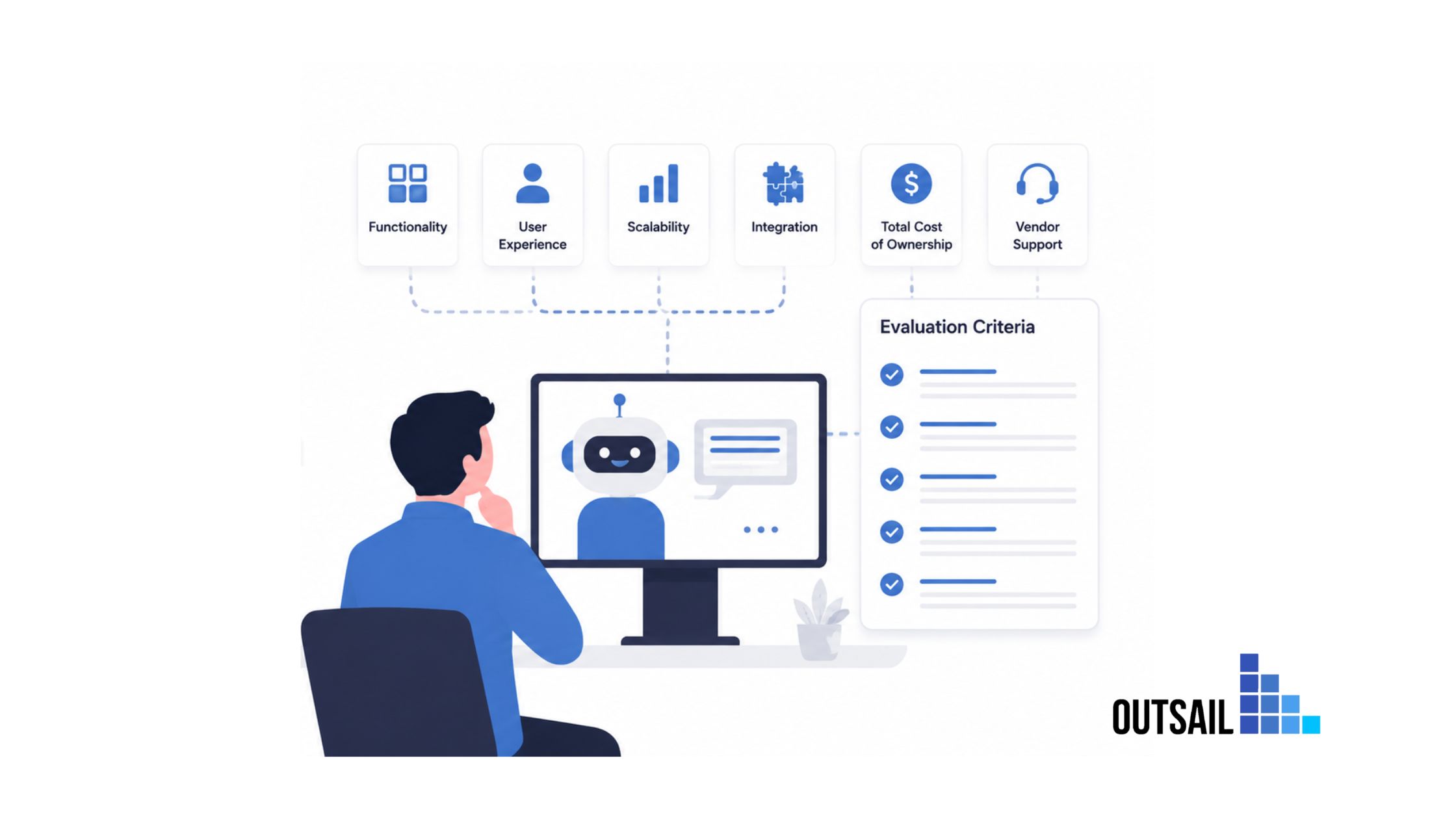
For a long time, HRIS vendor evaluations followed a familiar script. Build a requirements list covering payroll, time and attendance, benefits administration, and self-service. Schedule demos. Score each vendor against the same rubric. Negotiate. Sign.
That framework still matters. But it is no longer sufficient.
In 2026, the most consequential question in any HRIS evaluation is not whether a platform can process payroll accurately or manage time-off requests. Every credible vendor clears those bars. The question that separates good decisions from great ones is this: how well does this platform function as infrastructure for AI agents?
This shift is not hypothetical. The distinction between vendors positioning around automation efficiency and those positioning around orchestrated AI workflows is now the defining category boundary in HR technology. Organizations that run their next HRIS evaluation the same way they ran the last one will likely pick a platform that works fine today — but creates significant friction as their AI ambitions grow.
This article breaks down exactly what has changed, what the new evaluation criteria look like, and how to ask the right questions before you sign a multi-year contract.
Why This Matters Now — and Didn't Two Years Ago
The shift from analytical AI to agentic AI is the underlying force reshaping the evaluation landscape. Understanding that distinction is the starting point for everything else.
Analytical AI surfaces information. It tells a manager which employees are at flight risk, flags a payroll anomaly, or generates a workforce report. A human reviews the output and decides what to do next.
Agentic AI takes action. Where a chatbot answers "here is the leave policy," an AI agent checks the employee's balance, verifies eligibility, routes the approval, updates the HRIS, notifies payroll, and confirms the request is complete. The agent owns the workflow end-to-end, within defined guardrails, without waiting for a human to advance each step.
Most HRIS platforms already have some form of analytical AI. Only a subset are genuinely architected to support agents — and the difference lies not in any one feature, but in the underlying data infrastructure, API design, and integration openness of the platform.
Gartner predicts that 15% of day-to-day work decisions will be made autonomously through agentic AI by 2028, up from none in 2024, while 33% of enterprise software applications will include agentic AI by the same timeframe. For HR leaders signing three-year HRIS contracts today, that window falls squarely within their contract term. The platform you choose now will either enable or constrain your AI roadmap for that entire period.
Explore OutSail's Evaluation Tools
OutSail has already updated its vendor evaluation framework to incorporate AI readiness scoring. Our scorecard methodology helps HR and IT buyers assess platforms against both today's functional requirements and tomorrow's AI infrastructure needs.
Access OutSail's HRIS evaluation tools →
The 6 New Evaluation Criteria That AI Agents Demand
1. API Depth and Real-Time Data Access
Traditional HRIS evaluations treated integrations as a checklist item: does this platform connect to our ATS, benefits carrier, and payroll processor? Pre-built connectors and a reasonably open API were sufficient.
AI agents require a fundamentally different bar.
An agent operating across your HR tech stack needs to read data from the HRIS in real time — not via overnight batch syncs or periodic exports. It needs to write data back with the same immediacy. And it needs to do both across multiple systems simultaneously, maintaining consistency without manual reconciliation.
What to evaluate:
- Does the platform provide REST APIs with real-time data access, or are integrations batch-based?
- What are the rate limits on API calls, and do they accommodate agent-level query volumes?
- Is the data model well-documented and stable, or does it change frequently in ways that break integrations?
- Can third-party agents authenticate and operate within role-based permission structures?
- Does the vendor expose webhooks for event-driven triggers (employee hired, status changed, benefits enrolled), or do integrations require polling?
For HR leaders evaluating agentic automation platforms, the practical question is integration depth — an agent that can only operate within a single system offers limited value when your HR workflows span an HRIS, learning management system, benefits administration, and communication tools. The most capable platforms orchestrate agents across your full tech stack, maintaining governance and audit trails while eliminating the manual handoffs that slow down every process.
The vendors whose APIs are built for deep, real-time, write-as-well-as-read access are the ones whose platforms will function as genuine agent infrastructure. Treat API depth as a first-class evaluation criterion — not a technical footnote.
2. Data Model Quality and Single-Source-of-Truth Architecture
AI agents are only as reliable as the data they operate on. A fractured data model — where employee records live in one module, compensation data lives in another, and time records live in a third, with imperfect synchronization between them — produces agent errors that are worse than no automation at all, because they happen invisibly.
The single-database architecture that vendors like Paycom and Dayforce have built their reputations on is not merely a convenience feature. In an agentic world, it is a genuine infrastructure advantage. When a benefits agent, a payroll agent, and a scheduling agent are all drawing from the same underlying record in real time, the risk of contradictory actions or stale data decisions drops substantially.
What to evaluate:
- Is the platform built on a single data model, or is it assembled from acquired products stitched together via middleware?
- How does the platform handle data conflicts when multiple agents or modules update the same record simultaneously?
- What is the data latency between a change in one module (e.g., a new hire in core HR) and availability to another (e.g., payroll, benefits)?
- Does the platform maintain a full audit trail of agent-initiated data changes with attribution?
This is one area where legacy platforms assembled through acquisition carry hidden risk. If the vendor's product history involves multiple acquisitions of separate point solutions, ask specifically how the data layer was unified — and get a technical reference who can speak to real-world agent performance, not just the sales narrative.
3. Vendor AI Maturity — Embedded vs. Bolted On
Not all AI features in HRIS platforms are created equal. There is a growing gap between platforms that have genuinely rebuilt their architecture around AI-native capabilities and those that have added a layer of AI features onto existing infrastructure without changing the underlying foundation.
The practical test: ask the vendor to show you an AI feature that changed a decision, not just answered a question. Can the platform tell you which employees are statistically most likely to leave in the next 90 days based on compensation data, tenure, and manager engagement scores — and then surface a recommended action? That's embedded AI. A chatbot that summarizes the parental leave policy is not.
What to evaluate:
- Is the AI layer trained on the vendor's own HRIS data (giving it HR-specific context), or is it a general-purpose LLM wrapper?
- Can agents take action within the platform autonomously, or do all AI outputs require manual confirmation before execution?
- Does the vendor publish an AI product roadmap with specific agent capabilities and timelines, or is the AI story primarily marketing language at this point?
- What governance controls exist? Can administrators set agent permission boundaries, require human approval for defined action types, and review an audit log of agent decisions?
- Has the vendor published documentation on how its AI features were tested for bias, particularly in performance management, compensation, and promotion workflows?
The OutSail blog's exploration of AI-native HRIS with Winslow founder Niel Robertson provides a useful reference point: a platform built with agents as the primary design assumption looks architecturally different from one where AI was layered in after the fact. Context-aware agents, chat-first workflows, and modular design are markers of genuine AI nativity — not cosmetic AI features.
4. Agent Integration Roadmap and Ecosystem Openness
A vendor's current AI capabilities matter. Their roadmap matters more.
HR technology contracts typically run two to three years. An HRIS that scores adequately on AI readiness today but has no credible roadmap for agent orchestration, third-party AI partnerships, or ecosystem openness will likely be behind the market before your next renewal window opens.
What to evaluate:
- Does the vendor have a published or shareable agent integration roadmap? What specific agentic capabilities are planned and on what timeline?
- Does the platform participate in standard AI ecosystem frameworks — MCP (Model Context Protocol), OpenAI plugins, or equivalent interoperability standards?
- Can third-party AI systems (workforce planning tools, employee experience platforms, analytics layers) operate as agents within the platform's permission model?
- Has the vendor announced or launched partnerships with enterprise AI providers (Microsoft Copilot, Salesforce Agentforce, Workday AI, etc.)?
- What is the vendor's approach to AI governance as agents proliferate — do they have a stated policy on model updates, data residency, and agent action transparency?
Vendors still positioning around efficiency gains from automation are increasingly competing against vendors positioning around outcomes delivered by orchestrated agents. That is not a technology upgrade — it's a different value proposition. An honest roadmap conversation will reveal quickly which side of that divide a vendor is on.
OutSail's ongoing series on agentic AI vs. traditional automation in HR covers the practical implications of this distinction in detail — including what mid-market companies specifically need to consider before committing to a platform.
5. AI Workforce Planning Depth
One of the highest-value applications of AI in HRIS is workforce planning — moving from the annual spreadsheet-based headcount exercise to always-on, predictive forecasting that integrates HR, finance, and operational data continuously.
This capability requires specific architectural features that not all platforms have. And because it sits at the intersection of HR, finance, and strategy, it is increasingly a CHRO-and-CFO co-evaluation — meaning it carries more organizational weight than it did three years ago.
What to evaluate:
- Does the platform offer native scenario modeling — the ability to simulate workforce outcomes under different hiring, attrition, or structural assumptions in real time?
- Can the AI planning layer ingest data from external financial and operational systems, or is planning restricted to HRIS-native data?
- Does the vendor offer skills ontology features — the ability to map current workforce skills against future business requirements and identify gaps dynamically?
- How does the AI model surface attrition risk predictions, and on what data signals?
- Can workforce planning outputs be surfaced directly to business unit managers, or does everything route through central HR?
The gap between platforms here is wide. Some vendors have invested heavily in AI-powered workforce planning as a strategic capability. Others treat it as a reporting module with some predictive features bolted on. OutSail's deep dive on AI-powered workforce planning walks through what genuine always-on forecasting looks like and which platforms are leading this capability in 2026.
6. Compliance Infrastructure for AI Features — Including the EU AI Act
This criterion did not exist as a meaningful evaluation item three years ago. It is now non-negotiable for any organization with EU employees or operations.
Annex III of the EU AI Act specifically identifies two categories of employment-related AI as high-risk: recruitment and selection AI (including systems that place targeted job advertisements, analyze and filter applications, and evaluate candidates), and workforce management AI (including systems that make or influence decisions about promotions, terminations, task allocation based on individual behavior or traits, and performance monitoring).
In practical terms, this covers a significant portion of the AI features embedded in modern HRIS platforms — features that many organizations have already deployed or are planning to deploy.
What to evaluate:
- Has the vendor conducted and published an AI impact assessment for their high-risk AI features?
- Does the platform support the transparency and human oversight requirements mandated for high-risk AI systems?
- Where is AI model training data stored, and what are the data residency options for EU-based employee data?
- Does the vendor have a stated policy on model updates for AI features that affect employment decisions — are customers notified before changes go live?
- For US-headquartered organizations with EU teams: does the vendor's AI compliance documentation cover extraterritorial applicability?
OutSail's guide to EU AI Act compliance for HRIS is a practical starting point for organizations that need to map their current AI feature inventory against the regulation's requirements before their next contract renewal.
The Questions Most Buyers Aren't Asking in Demos — But Should Be
Standard HRIS demo scripts are built around workflows: show me how payroll runs, show me the onboarding checklist, show me the performance review cycle. These are still worth seeing. But they reveal almost nothing about AI readiness.
Add these to your demo script:
"Show me an AI feature that executed an action without human initiation." If the vendor can only show you AI-generated suggestions or dashboards — not autonomous actions — they are not yet in agentic territory.
"Walk me through the API call structure for a third-party agent to update an employee record." This surfaces real API depth vs. marketing language immediately. A credible answer involves documentation, authentication flows, and rate limits. A vague answer is a data point.
"What happens when an AI agent makes a mistake — how is it detected, reversed, and audited?" Governance and reversibility matter as much as capability. Vendors with mature agent implementations have clear answers here.
"What third-party AI tools are live customers using in production on your platform today?" Proof beats roadmaps. Real examples of third-party agents running in production are a stronger signal than any roadmap slide.
"What does your AI compliance documentation look like for high-risk features under the EU AI Act?" For global organizations, this separates vendors that have thought through AI governance from those that are still building it reactively.
How Vendor AI Maturity Maps to Platform Type
Not every organization needs or is ready for full agentic orchestration. The right AI evaluation depth depends on where you are in your own AI maturity curve.
- Early-stage AI adopters (just beginning to explore AI features) should focus primarily on data quality and API openness — ensuring the foundation is sound before building upward. Evaluating for embedded analytical AI, self-service reporting quality, and clean data architecture is the right starting point.
- Mid-stage AI adopters (using AI for specific workflows like recruiting automation, people analytics, or chatbot-based employee service) should focus heavily on Criteria 3 and 4 above — vendor AI maturity and the agent integration roadmap. These organizations will hit the ceiling of their current platform within 18–24 months if they don't make AI roadmap a serious selection criterion now.
- Advanced AI adopters (actively exploring or deploying agentic workflows across HR operations) need all six criteria evaluated in full — and should consider engaging technical stakeholders in the HRIS evaluation process, not just HR operations. At this stage, the HRIS selection is as much an IT infrastructure decision as an HR one.
The master vendor scorecard approach — scoring each criterion quantitatively across competing platforms — is the most defensible way to structure this evaluation. OutSail's complete vendor scorecard blueprint provides a ready-made framework that teams can adapt to incorporate AI readiness weighting alongside traditional functional requirements.
What Platforms Are Doing This Well in 2026
Naming individual platforms as AI leaders is a fast-moving target — the landscape is shifting quarterly. But a few architectural and investment patterns are worth noting as positive signals:
- Workday has invested aggressively in agentic AI capabilities, including their Extend platform for building custom agents, Skills Cloud for skills-based workforce planning, and deep Microsoft Copilot integration. For enterprise buyers, Workday's commitment to being an AI platform — not just an AI-featured application — is among the most credible in the market.
- Rippling built its platform on a unified data model combining HR, IT, and finance from day one — an architecture that makes cross-system agent orchestration structurally simpler than on most legacy platforms. Its more recent AI investments build on a strong data foundation.
- Dayforce has moved deliberately toward real-time data architecture (its single payroll engine is the best-known expression of this), and its AI investments in scheduling and workforce management reflect a platform designed for continuous data access rather than batch processing.
- AI-native entrants like Winslow, which OutSail has profiled in detail, are building with agents as the primary design assumption from the ground up — a fundamentally different approach than retrofitting AI onto legacy architecture. For organizations willing to take on the implementation and maturity risk of newer platforms, these vendors represent where the category is heading.
For a broader view of how AI capabilities are shaping the overall HRIS market in 2026 — including which platforms are leading versus lagging — OutSail's 2026 SaaS HR software buyer's guide provides a comprehensive vendor-by-vendor breakdown.
Conclusion
The best HRIS evaluation processes were always about more than checking feature boxes. They were about making a strategic infrastructure decision — choosing a platform that would serve the organization's needs not just at go-live, but three years into the contract.
In 2026, that forward-looking judgment requires incorporating AI agent readiness as a primary criterion. The organizations that ask hard questions about API depth, data architecture, vendor AI maturity, and compliance posture during their evaluations will be the ones whose HRIS investments compound in value as AI adoption accelerates. The ones that don't will find themselves managing a familiar problem: a platform that met last year's requirements but constrains next year's ambitions.
Evaluation frameworks built for a pre-agentic world produce pre-agentic decisions. The criteria have changed. The evaluation process should too.
Start Your AI-Ready HRIS Evaluation with OutSail
OutSail's evaluation framework already incorporates AI readiness scoring alongside traditional HRIS selection criteria. Our advisors help HR and IT teams build structured, vendor-agnostic evaluations that account for both functional requirements today and AI infrastructure needs tomorrow — at no cost to your organization.
Book a free evaluation consultation with an OutSail advisor →
Frequently Asked Questions
What does "AI-ready HRIS" mean, and how do I know if a platform qualifies?
An AI-ready HRIS is one whose data architecture, API design, and integration model can support autonomous AI agents operating across the HR tech stack — not just AI-powered features within the platform itself. The markers of a genuinely AI-ready platform include: real-time REST APIs with write access (not just read), a unified data model rather than stitched-together modules, published agent integration documentation, event-driven webhooks, and role-based permission controls for third-party agents. A platform that scores well on traditional HRIS evaluation criteria but lacks these architectural features may still support useful AI features — but it will create friction as your AI deployment ambitions grow within the contract term.
How should AI capabilities be weighted in an HRIS vendor evaluation scorecard?
The right weighting depends on your organization's current AI maturity and strategic timeline. As a starting point: for organizations just beginning AI exploration, AI readiness criteria should account for roughly 15–20% of the overall scorecard weighting, alongside functional requirements (payroll, time, benefits) and operational factors (implementation, support, cost). For organizations actively deploying AI workflows, that weighting should move to 30–40%. The key is that AI criteria should be scored quantitatively — not treated as a soft "nice to have" category — so that the evaluation captures real architectural differences between platforms. OutSail's vendor scorecard blueprint provides a structured starting point that teams can customize.
What is the difference between a vendor that has AI features and a vendor that is AI-ready?
A vendor with AI features has added AI-powered functionality — chatbots, predictive analytics dashboards, automated suggestions — onto an existing platform architecture. A vendor that is genuinely AI-ready has built or rebuilt its data model, API layer, and integration architecture to support autonomous agents operating at scale across connected systems. The practical test: can a third-party AI agent authenticate to the platform, query employee data in real time, take action (update a record, trigger a workflow, initiate a notification), and leave a reversible audit trail — all without human intervention per step? If yes, the platform is AI-ready. If the vendor can only demo its own native AI features during a controlled scenario, dig deeper before drawing conclusions.
How does the EU AI Act affect HRIS vendor selection for US-based companies?
The EU AI Act applies to any organization deploying AI-powered HR tools that affect people located in the EU — regardless of where the deploying organization is headquartered. For US companies with EU employees or hiring EU-based candidates through AI-screened processes, this creates concrete compliance obligations. The Act classifies recruitment and selection AI and workforce management AI (including performance monitoring, promotion, and termination decision support) as high-risk systems, requiring transparency documentation, human oversight mechanisms, data management protocols, and documented impact assessments. This means US-headquartered buyers evaluating HRIS platforms that include these AI features need to ask vendors for their EU AI Act compliance documentation before signing — not after go-live. OutSail's EU AI Act compliance guide for HRIS covers the specific steps involved.
Should the IT team be involved in HRIS vendor evaluations that include AI criteria?
Yes — and this represents one of the most meaningful changes in how HRIS evaluations should be structured in 2026. When evaluating AI readiness, the relevant questions are architectural: API design, data model structure, authentication and permission models for third-party agents, rate limits, and data residency options. These are questions that IT and enterprise architecture stakeholders are better positioned to evaluate than HR operations alone. The most effective AI-era HRIS evaluations involve an HR lead responsible for functional requirements, an IT or engineering stakeholder responsible for API and architecture evaluation, and a finance stakeholder who can weigh total cost of ownership including AI infrastructure costs. OutSail advisors are also experienced in bridging this multi-stakeholder evaluation structure and can help facilitate the right conversation across all three groups.
.png)
