What Is Semi-Monthly Payroll? A Simple Guide for Employers
Explore what semi-monthly payroll is. Learn the pros, cons, and legal tips. Compare semi-monthly and biweekly payroll frequencies to find the right HRIS system.


Managing payroll isn’t just about writing checks — it’s about striking the perfect balance between compliance, employee satisfaction, and operational efficiency. One of the key decisions every employer must make is choosing a payroll frequency, and that’s where semi-monthly payroll comes in.
But what exactly is semi-monthly payroll? How does it compare to biweekly pay cycles? And more importantly, how can employers make the right choice?
In this comprehensive guide, we’ll explore everything you need to know — including pros, cons, legal considerations, and how a modern HRIS (Human Resources Information System) can streamline it all.
What Is Semi-Monthly Payroll?
Semi-monthly payroll is a schedule where employees are paid twice per month, typically on fixed calendar dates, such as the 15th and last day of the month. This results in 24 pay periods per year.
This differs from biweekly payroll, where employees are paid every two weeks (usually on a consistent day, such as Friday), resulting in 26 pay periods per year.
Key Features:
- Number of pay periods: 24 annually
- Common pay dates: 15th and 30th/31st
- Ideal for: Salaried employees and monthly financial alignment
Semi-Monthly vs Biweekly: Key Differences
The debate between semi-monthly vs biweekly payroll often comes down to organizational structure and workforce type.
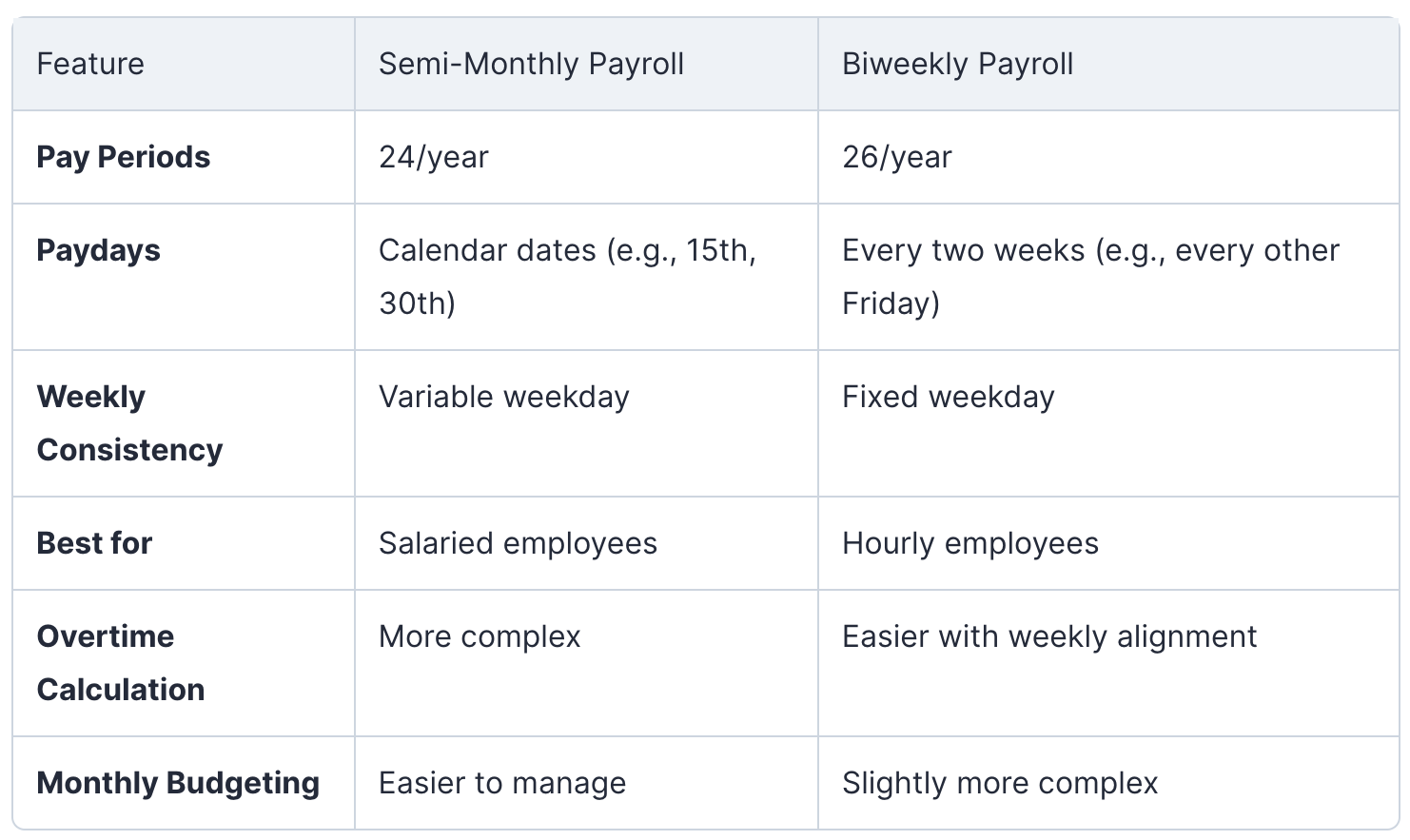
Pro tip: Most salaried roles align naturally with semi-monthly, while hourly or shift-based roles benefit from biweekly pay.
Advantages of Semi-Monthly Payroll
Implementing a semi-monthly payroll system offers several strategic benefits, especially for organizations looking to align operational efficiency with employee satisfaction.
1. Smoother Accounting & Forecasting
Semi-monthly payroll aligns naturally with monthly accounting cycles, simplifying budgeting and financial reporting. Since most businesses track revenue, expenses, and operational costs every month, having two consistent payroll dates per month provides clear visibility and predictability. This makes it easier for finance teams to match payroll liabilities with income and allocate resources effectively.
2. Fewer Payroll Runs = Lower Administrative Burden
With only 24 payroll runs per year, semi-monthly schedules reduce the frequency of processing, saving time, reducing human error, and lowering costs, particularly for businesses that use payroll services that charge per cycle. Over a year, this can translate into significant administrative efficiency.
3. Improved Financial Planning for Employees
Because paydays occur on regular dates, such as the 15th and 30th, employees can align their personal budgets with recurring expenses like rent, loans, and bills. This predictability helps reduce financial stress and fosters better money management habits.
4. Preferred in Professional Settings
Industries with a high percentage of exempt (salaried) employees, such as tech, education, and finance, often favor semi-monthly payroll for its structured and polished approach. It reflects a standard of professionalism and consistency that employees come to expect.
Disadvantages of Semi-Monthly Payroll
While semi-monthly payroll offers several advantages, it also presents unique challenges that employers should consider carefully.
1. Inconsistent Weekday Pay
Because semi-monthly paydays are tied to specific calendar dates (like the 15th and 30th), they may occasionally fall on weekends or public holidays. When this happens, employers must either advance or delay payroll processing, which can disrupt cash flow and lead to confusion if not communicated clearly.
2. Challenging for Hourly Staff
For hourly employees, semi-monthly periods don’t align neatly with standard workweeks. This makes tracking regular hours, overtime, and holiday pay more complex. If not managed properly, it could lead to wage miscalculations and even compliance violations with labor laws.
3. Potential Employee Confusion
Employees accustomed to biweekly pay may find semi-monthly schedules inconsistent, especially when paydays shift or when some months feel shorter. This can complicate personal budgeting, particularly for employees who rely on predictable, same-day-of-the-week income.
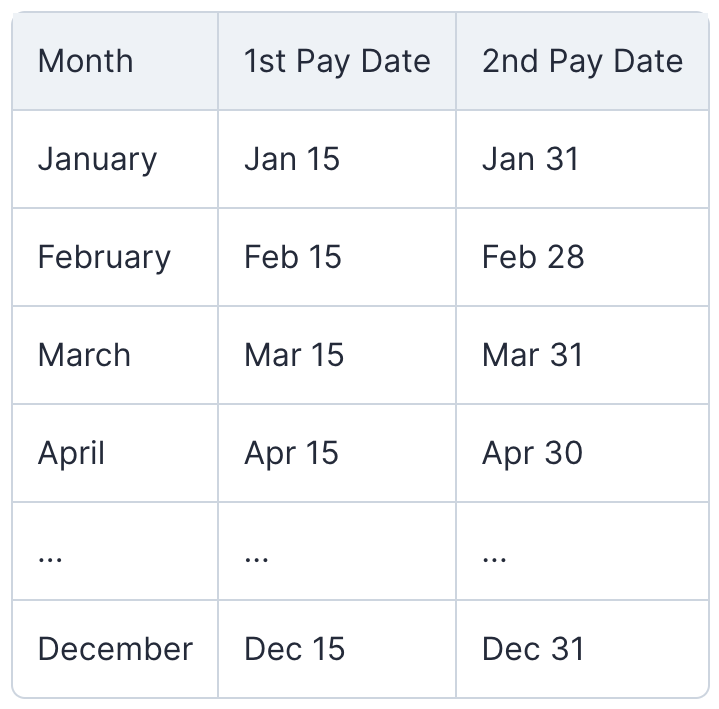
Payroll Calendar Visualization: Semi-Monthly vs Biweekly
Let’s look at how semi-monthly and biweekly payroll schedules differ over a calendar year:
Semi-Monthly Payroll Calendar (Sample)
Biweekly Payroll Calendar (Sample)
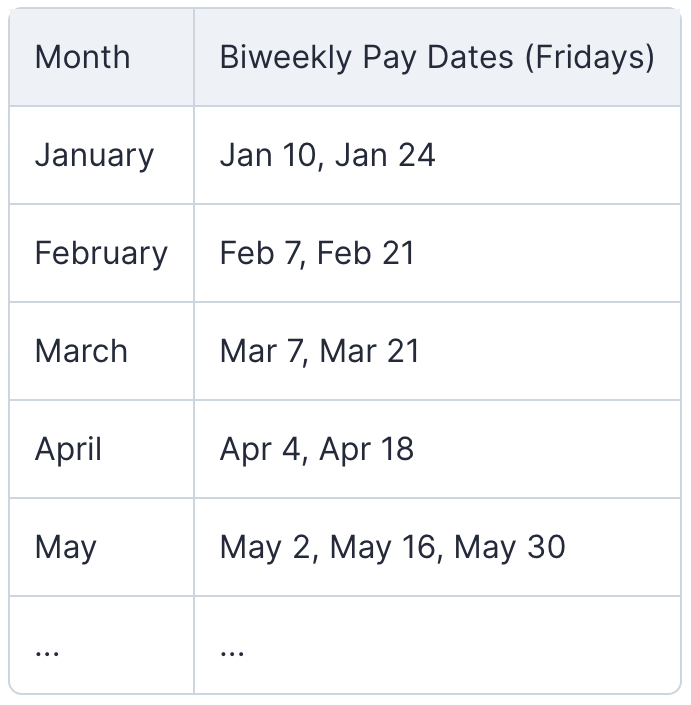
Note: Biweekly schedules sometimes result in three pay periods in one month, creating budget anomalies.
Legal Considerations for Employers
Before adopting semi-monthly payroll, employers must ensure compliance with state labor laws. For example:
- California allows semi-monthly pay for salaried workers but mandates weekly or biweekly pay for specific hourly roles.
- New York requires manual workers to be paid weekly, unless special permission is obtained.
Always check your state-specific regulations or consult a compliance expert before rolling out a new payroll schedule.
How HRIS Software Simplifies Semi-Monthly Payroll
Managing semi-monthly payroll manually can be a headache, especially when holidays, bonuses, and compliance regulations are involved.
That’s where a Human Resources Information System (HRIS) becomes a game-changer.
Benefits of HRIS for Payroll Management:
1. Automated Payroll Runs
Modern HRIS platforms can automate pay calculations, tax withholdings, direct deposit timing, and off-cycle pay for bonuses or corrections.
2. Time & Attendance Integration
When integrated with time-tracking tools, HRIS software ensures that hourly and salaried employee data flows seamlessly into payroll, even for irregular pay periods.
3. Error Reduction
Automated processes reduce the likelihood of human error, ensuring compliance with federal and state labor laws.
4. Employee Self-Service
Employees can access pay stubs, W-2s, and PTO balances directly from the system, minimizing HR requests and boosting transparency.
5. Payroll Calendar Management
Many HRIS platforms include a built-in payroll calendar, making it easy to set semi-monthly pay dates, calculate proration, and manage exceptions for holidays.
Is Semi-Monthly Payroll Right for Your Business?
The decision between semi-monthly and biweekly payroll boils down to workforce composition, business size, cash flow, and administrative capacity.
Choose Semi-Monthly If:
- You have mostly salaried employees
- You prefer fixed payday dates
- You want easier integration with monthly accounting
- Your payroll software or HRIS supports semi-monthly schedules
Choose Biweekly If:
- You manage a large hourly workforce
- You need to track overtime weekly
- You want consistent paydays on Fridays
- Your benefits and insurance deductions are structured biweekly
How to Implement Semi-Monthly Payroll Successfully
Here’s a simple roadmap for switching or starting with semi-monthly payroll:
1. Verify Compliance
Review federal and state laws to ensure the schedule is allowed for your employee classifications.
2. Choose the Right HRIS Software
Pick an HRIS platform that supports semi-monthly cycles, automated tax filings, time tracking, and easy reporting.
Need help finding the best HRIS? Keep reading for an easy solution.
3. Notify Employees
Send clear communications and FAQs so employees understand the change and how it affects them, especially if they’re used to being paid biweekly.
4. Audit & Test the System
Do a test payroll run to ensure calculations (like prorated pay, taxes, and benefits) are accurate across a range of employee types.
Final Thoughts: Payroll Frequency Matters
Choosing the right payroll frequency has ripple effects across your organization, from budgeting and compliance to employee happiness and retention.
Semi-monthly payroll is a powerful option for companies seeking streamlined operations, improved financial alignment, and a professional appearance.
But it's only effective if backed by the right tools — and that’s where we come in.
Simplify Payroll & HRIS Selection with Outsail
Choosing the right payroll system or HRIS software can be overwhelming due to the multiple options available. Outsail specializes in helping growing companies navigate the complexities of payroll and HR technology at no cost to you.
Our team offers free, unbiased consultations to connect you with the right technology partners tailored to your specific business needs. Whether you're looking to manage semi-monthly or biweekly payroll, streamline operations with HRIS platforms that provide advanced automation, or enhance your processes around benefits administration, time tracking, onboarding, and performance management, we’re here to support you every step of the way.
By partnering with Outsail, you’ll save time, reduce risk, and make confident decisions without the stress of shopping for vendors on your own.
Ready to find your perfect HR partner? Contact Outsail and start your journey today.



.png)
