Frontier AI Labs Are Entering The Arena and Other Big HR Tech Stories
Anthropic, Gusto, TriNet, Paylocity and UKG signal a rapidly changing future for HR software and services

The big story this month: Frontier AI labs are no longer just influencing HR tech from the outside. They’re officially stepping onto the field.
Over the last few weeks, Anthropic quietly signaled plans to build an HRIS, frontier AI companies announced implementation arms, and some of the biggest vendors in HR tech continued reshaping themselves around what this next era might look like.
At the same time, we’ve also seen major acquisitions in heavy compliance areas, a leadership shakeup at isolved, Deel continuing to expand beyond its boundaries, and a big announcement from Paylocity.
In other words: a very busy few weeks in HR tech.
But the biggest story by far is this one:
The AI labs are no longer just model providers. They are becoming software companies, services companies, and potentially HR tech companies too.
Let’s dive in.
1. Anthropic is quietly entering HR tech
One of the most circulated job postings in HR tech over the last few weeks came from Anthropic.
The company behind Claude is hiring to help build out a People product.
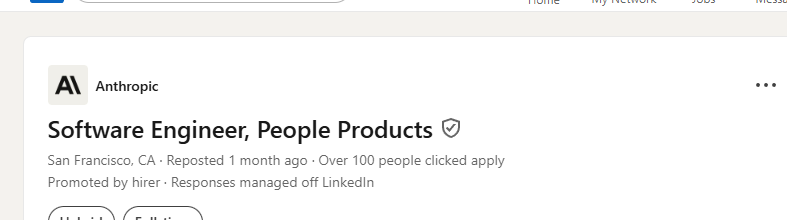
Put more directly: a leading AI company is very openly signaling that they intend to build an HRIS.
That’s a pretty massive development.
For years, the assumption was that OpenAI, Anthropic, Google, and others would sit beneath the software layer. The models would power better features, but they wouldn’t necessarily build the applications themselves.
That assumption is starting to crack.
And honestly, it makes sense if you follow the money.
Anthopic and OpenAI are hoping to IPO in the near-term, and simply being the best coding platform won’t be enough of a story to justify the mind boggling amounts of capital they’ve raised.
To satisfy investor demand, these companies will have to meaningfully eat into the valuations of the world’s largest SaaS companies - which means targeting verticals like CRM, ERP and, yes, HCM.
The really interesting question now becomes:
Does the future HRIS look more like Workday... or more like Claude?
Workday talent is heading to Anthropic too
Another detail that flew a bit under the radar:
Workday’s CTO recently left the company for Anthropic.
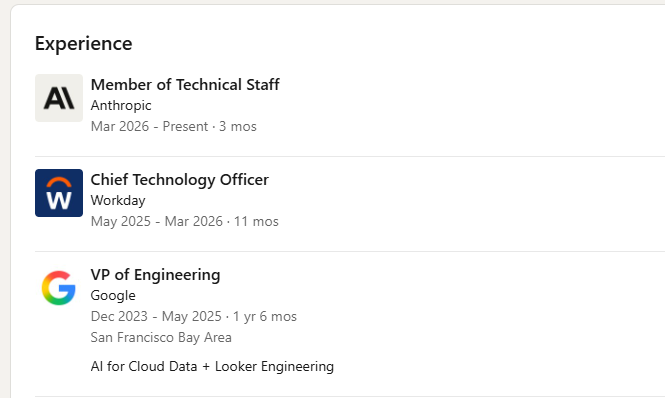
To be clear, there’s no indication this is directly tied to a future HR product. But it’s still notable.
One of the biggest questions in enterprise software right now is where the next generation of software talent wants to work.
Five years ago, the answer was probably Snowflake, Databricks, Workday, ServiceNow.
Today, a lot of that gravity has shifted toward the frontier labs.
These labs are no longer just research companies. They’re becoming product companies, infrastructure companies and platform companies too.
The frontier labs are building consulting firms now too
The third Anthropic / OpenAI story might actually be the most important one.
Both companies have now announced consulting and implementation-style subsidiary companies designed to help businesses reap the benefits of AI faster.
Essentially saying: “The models are good enough. The adoption isn’t.”
This is one of the clearest acknowledgements yet that AI alone is not enough.
The frontier labs are realizing the same thing enterprise software companies learned decades ago: technology without implementation, process redesign, governance, and organizational buy-in rarely produces ROI.
And rather than letting Deloitte, Accenture and Bain spin up billion dollar AI implementation practices, the labs think they can do this work better themselves.
From an HR Tech perspective, the takeaway is that a service layer will remain critical.
There will absolutely be AI-native systems. Every HRIS vendor will launch their own AI agents.
But there will also be a booming opportunity for implementation firms, AI consultants, workflow designers, integration specialists and change management experts.
And frankly, HR tech is probably one of the most fertile grounds for this to happen because HR systems sit at the intersection of compliance, workflows, payroll, employee data, organizational structure, and permissions.
You can’t just throw Claude into a company and magically transform People Ops overnight.
There’s still a giant operationalization gap, and the frontier labs are openly acknowledging it.
But, while their new subsidiaries chase Fortune 500 clients, opportunities will abound for AI transformation work in the mid-market.
2. Paylocity moves further into managed services
Paylocity announced Elevate Solutions, a new offering that combines their HCM platform with dedicated payroll and HR operational support teams.
For years, HR tech had relatively clear lines between software companies, consultants, outsourcing firms, and PEOs. But the market keeps pulling those categories together because buyers increasingly want a simpler answer and fewer vendors.
They want strong technology, reliable support, compliance help, payroll expertise, and operational coverage all packaged together in a way that feels coordinated.
That’s exactly where Elevate fits.

We’ve talked repeatedly about the rise of the “pseudo-PEO” model. Companies love the simplicity of having one place to go for HR support, payroll, compliance, and technology. But many organizations eventually outgrow the rigidity, pricing structure, or co-employment relationship of a traditional PEO.
The market’s response has been to recreate the best parts of that experience in a more flexible model.
That’s why you’re seeing brokers build managed service arms. Outsourcing firms deepen technology partnerships. HCM vendors expand service offerings. Everyone is trying to assemble a cleaner, more scalable version of the all-in-one HR operating model.
ADP was one of the first-to-market in this area. Since then, we’ve seen Managed Services rollouts from Paycor/Paychex, Dayforce, UKG and now, Paylocity.
3. Gusto and TriNet make very smart acquisitions
On a related note, one of the quieter themes in HR tech over the last few years has been the rise of vendors solving deeply unsexy, but incredibly important, compliance problems.
State registrations, business compliance, and leave management will never get the same conference buzz as AI.
But in our client conversations, they come up constantly.
These are the areas where HR teams lose hours, make costly mistakes, and quietly wonder why the software industry hasn’t done a better job solving them already.
Gusto acquires Mosey
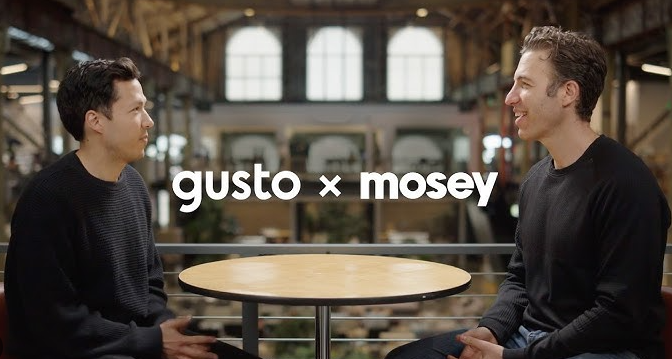
Gusto acquired Mosey, a company focused on state registrations and business compliance management.
On paper, this might not sound like the flashiest acquisition in the world.
But, if you’ve followed this newsletter, you know that I think this is one of the smartest acquisitions we’ve seen all year.
Businesses absolutely hate dealing with state registrations, unemployment accounts, tax IDs, random .gov websites, mailed verification codes, and compliance notices.
Every payroll vendor gives customers instructions for these processes.
Very few actually solve the problem for them.
And it’s one of those “death by a thousand paper cuts” experiences that customers remember forever.
What surprised me most is honestly that it took this long for an HCM vendor to acquire a company like Mosey.
Because this is exactly the type of operational friction that modern HR tech should be eliminating.
TriNet acquires Cocoon

TriNet acquired Cocoon, a modern leave management platform.
Cocoon joins a fast-growing category alongside vendors like Tilt, Sparrow, and Aidora that are trying to modernize one of the messiest areas in HR: employee leave management.
And this category has become incredibly important incredibly quickly.
Leave management is highly emotional, compliance-heavy, state-specific, constantly changing, and extremely expensive when done incorrectly.
Unlike some areas of HR tech, this isn’t just operational software.
These are some of the most important and vulnerable moments in an employee’s life.
That combination of compliance burden, emotional importance, and operational complexity makes this category incredibly valuable.
As a PEO and outsourcing company, TriNet already sit close to compliance administration, employee support, and HR operations. Leave management fits naturally into their broader services story.
And if you’re another leave management vendor right now?
You’re probably feeling pretty good.
I suspect companies like Sparrow, Tilt, and Aidora are now extremely high on acquisition target lists across the industry
4. isolved turns to an AI operator
isolved announced that longtime CEO Mark Duffell is retiring after a very successful six-year run leading the company.
Duffell helped modernize the isolved brand, sharpen their market positioning, and establish them as a serious contender in the mid-market HCM landscape.
He’ll be succeeded by Michael Haske, who previously spent years helping scale Paylocity during a hugely successful growth era.
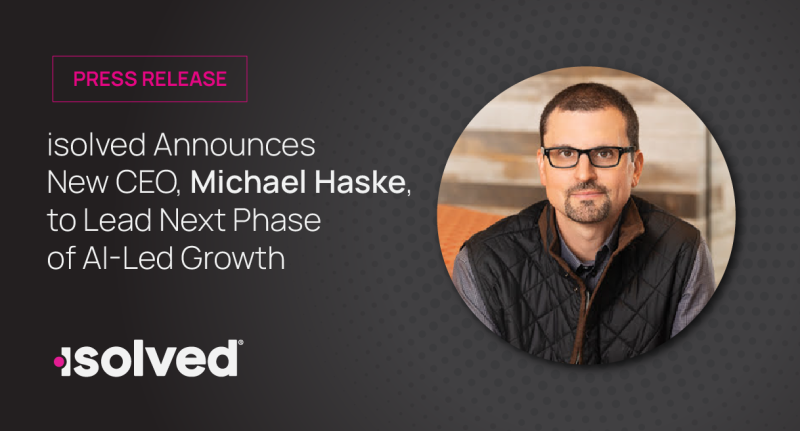
That alone would make this noteworthy.
But the more interesting detail is what Haske was doing immediately before this role.
He had been working at a smaller AI deployment agency helping organizations operationalize AI internally.
Like most press releases these days, isolved’s announcement leaned heavily into AI. And normally, that might be a cue for some healthy eye rolling.
But this one feels different.
Combining Haske’s deep HCM operating experience with recent AI implementation experience feels like a worthwhile bet from the isolved board.
5. Deel acquires Sastrify and keeps broadening the vision
Deel acquired Sastrify, the SaaS procurement and software spend management platform.
For almost any other company, this might feel like a random, disconnected addition.
A global payroll company buying a SaaS procurement company?
Sure.
But when you look at the scale and scope of what Deel is trying to build, the logic becomes much clearer.
The biggest HR tech companies no longer want to just own HR, payroll, and onboarding.
They want to own the broader category of workforce operations, where HR and IT increasingly overlap.
And that overlap naturally expands into areas like identity management, device management, app provisioning, software spend, and vendor management.
Rippling has been pushing the HR-meets-IT convergence for years, especially around device management, identity, and app provisioning.
That pressure has forced many HCM vendors to respond with new IT-adjacent capabilities of their own.
Deel has already been keeping pace with Rippling in this broader workforce operations race, and the Sastrify acquisition pushes them even further into new territory.
6. UKG keeps slimming down
UKG reportedly laid off approximately 950 employees in April, representing roughly 6% of its workforce, as part of another restructuring effort.
The company pointed toward AI, changing customer expectations, and shifting competitive dynamics as drivers behind the move.
And honestly, this story probably has multiple truths happening simultaneously.
Yes, AI is absolutely changing how software companies think about staffing and operational efficiency.
But these layoffs feel broader than AI.
The SaaS market hasn’t, and may never, returned to the easy-money, hypergrowth environment of 2021-22.
UKG is owned by private equity which comes with real timeline, margin and execution pressures.
And software companies across every vertical are having to make hard decisions, especially those that overstaffed thinking the 2021-22 era would last forever.
That’s all for this month.
As always, we’ll keep tracking the moves that matter across HR tech, payroll, benefits, AI, and workforce operations. And if the last few weeks are any indication, we probably won’t be short on things to talk about next month.
Forwarded this email? Subscribe here


.png)
