Building the Infrastructure for Global Work - A Conversation with Alex Bouaziz
A conversation with Alex Bouaziz, Co-founder & CEO of Deel, on global payroll, product philosophy, and competing without constraints

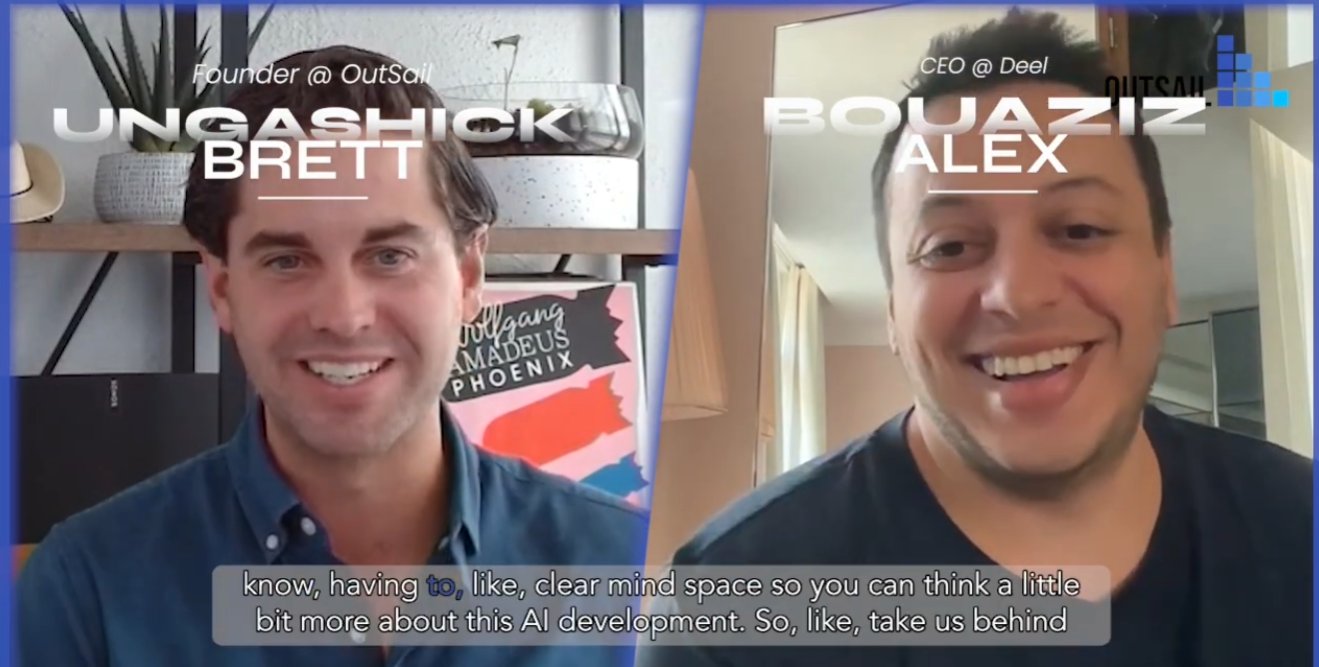
Deel started with a simple observation.
The world had already become global. Hiring had not.
Alex Bouaziz grew up in Paris. His co-founder grew up in China. Both had spent time working across borders and saw the same pattern play out over and over again. Companies wanted access to talent everywhere, but the infrastructure to support that just wasn’t there.
“We just want to enable amazing companies to be able to hire the best people in the world,” Alex said.
At the time, that meant solving for a very specific problem. A better way to pay global contractors.
Then the world changed.
When the market catches up
Deel launched before COVID. By the time the market began wrapping their heads around this new normal, Deel’s global employment suite was already in motion.
“I think the whole COVID thing kind of pushed for a lot of different things that… helped us,” Alex said.
Overnight, everyone was remote. The distinction between local and distributed teams started to break down. And with that came a shift in expectations.
Companies wanted to treat employees the same, regardless of where they lived. That meant payroll, compliance, onboarding, and experience all needed to evolve.
“The balance of power… got really disrupted,” Alex said. “HR leaders… were assigned more budget to be able to do something that I think they always had in mind.”
Contractor payments and EOR may have been the entry point, but it was never the end state.
Building across the full surface area
One of the more interesting parts of Deel’s approach is how they think about product scope.
From the outside, it can look like they’re trying to build everything. Global payroll, US payroll, immigration, IT, HRIS.
Internally, Alex frames it differently.
“What we want to be is thinking of our product as standalone products… but at the same time build up the infrastructure so that whenever you buy a Deel product… you’ll be able to sync it with all of the other products in the market.”
That duality shows up in how they go to market.
Deel has very open APIs, and a clear willingness to integrate, partner and white label. But also a clear ambition to compete for the full stack over time.
“It’s kind of like a funny bundled slash unbundled play,” he said.
This balance comes from a refreshingly client-centric mindset.
Alex doesn’t believe in locking buyers into additional products just because you can. Instead, the approach is about giving buyers maximum choice and competing on merit to be the best option for that client.
Starting from the hardest layer
A big part of Deel’s confidence comes from where they started.
Global employment tools are less of a feature set and more of an infrastructure layer.
Software is the easy part. Diligent, secure, compliant employment infrastructure in every country is the painstaking challenge.
“You want to build payroll integration into the Brazilian government system? Be my guest,” Alex said, summarizing the essence of Deel’s moat.
Many global HR systems were built to support one country first. Deel was built for a multinational application from day one. Worker types, compliance, local regulations, and payment rails were all designed in a way that could be transferable.
“When we kind of came in… whether you’re in the US, in the UK, in Nigeria, in Japan, we kind of build horizontally there.”
Once that layer exists, the rest of the platform starts to take shape differently.
Rethinking the system of record
One of the more forward-looking parts of the conversation was Alex’s take on the system of record.
For years, HR and finance leaders have been anchored to a single platform. Not because it was always the best option, but because switching was too painful.
Alex never liked that dynamic.
“It’s not okay to lock in people into sub-quality product… just because you’re the system of record.”
Deel has always approached the market with openness. Integrations. Flexibility. Let customers choose the tools they want.
And Alex believes the market shifts are in favor of this dynamic.
“The gun to your head thing is just not going to work anymore.”
AI changes the equation. If migration becomes easier, the cost of switching drops. That removes one of the biggest advantages incumbent systems have relied on.
“If you can start having AI agents doing the full migration for you… that mode’s completely gone.”
For Deel, they are happy to compete in a world less focused on lock-in and more focused on which product actually works best.
Acquisitions as a product strategy
Deel has also been aggressive with acquisitions, but not in the way most people assume.
Alex Bouaziz sees it less as buying revenue and more as acquiring perspective.
“The best way to be able to acquire people that are kind of obsessed with the problem that you want to solve… is acquisition.”
That shows up in how they integrate those companies.
Zavvy for learning and performance. Legalpad for immigration. Each one brings founders and a team that has spent years focused on a specific problem.
“It’s just much better to bring someone that has thought about this for five years.”
From there, Deel rebuilds the product inside its own infrastructure to maintain a single, unified platform.
The result? A combination of speed, depth and unification that is hard for peers to keep pace with.
AI changes how companies get built
The AI conversation didn’t stay at the product level for long. It moved into how companies will evolve in this new era.
“The way companies are being built right now is vastly different than they used to be built before.”
Most teams are wired for incremental progress. Focus on KPIs. Improve the experience. Ship the next version. Move something forward without breaking what already works.
That muscle memory is hard to shake.
What Alex described is a shift away from that entirely.
Instead of starting from the current product and asking how to improve it, teams are starting from a blank slate. If we were building this today, with the tools we now have, what would it look like?
It removes some of the bias toward what already exists. It creates space to question things that would normally be taken for granted. And it forces a different kind of clarity around what actually matters versus what’s just been carried forward over time.
He hinted at how that shows up in practice.
The role of leadership becomes less about protecting the roadmap and more about pushing teams to rethink it. Less anchoring on what’s already been built, more willingness to rebuild parts of the system if the new approach is clearly better.
This dynamic changes how product teams operate, how quickly decisions get made, and how much of the existing system is treated as fixed.
And it’s happening at the same time the underlying tools are getting dramatically more powerful.
A company that is willing to rethink how it operates, while leveraging the most powerful technology we’ve ever seen, is one that can sustain - and even accelerate - a trajectory like Deel’s.
Closing
For a company that’s grown as quickly as Deel has, it would be easy for the tone to feel certain, declarative, even arrogant.
That’s not how Alex Bouaziz comes across.
If anything, there’s a consistent thread of humility in how he talks about the business. A willingness to bring in people who have thought more deeply about specific problems. A recognition that many of the best ideas won’t come from inside the company. And a comfort with rethinking everything as the market evolves.
This mindset shows up in the way they approach acquisitions, not as a shortcut, but as a way to bring in people who have spent years focused on a problem.
It shows up in their openness. APIs, integrations, and a genuine willingness to fit into a customer’s existing ecosystem rather than forcing everything into one system.
And it shows up in how they think about winning.
Not through lock-in. Not through switching costs. But by building something customers actually want to use.
As Alex put it, the future is less about being in the right place at the right time and more about a simple question.
“Am I the best product for my customers?”
For a company operating at Deel’s scale, that mindset is refreshing. And it may be one of the reasons they’ve been able to move as quickly as they have.
FAQ
Who is Alex Bouaziz?
Alex Bouaziz is the co-founder and CEO of Deel, the payroll and HR platform for global teams. An entrepreneur and product-focused leader, he co-founded Deel in 2019 to address the challenges of hiring, managing, and paying people across borders. His approach to building Deel has been shaped by his own international background and experience working across different markets. In addition to his role at Deel, he is also a Founding Partner at Sarona Ventures and an active private investor in technology startups.
What does Deel mean by “infrastructure for global work”?
It refers to the foundational systems required to support global teams, including payroll, compliance, onboarding, and payment infrastructure across different countries. Rather than being a single feature or tool, it represents the underlying layer that enables companies to operate seamlessly across borders while adapting to local regulations and requirements.
What is Deel’s product philosophy according to Alex Bouaziz?
The company focuses on building standalone products that can integrate with other tools, while also developing a broader infrastructure layer that connects them.
How is AI expected to impact global HR and payroll systems?
Alex Bouaziz suggests that AI could reduce the friction of switching systems by enabling easier data migration, which may shift competition toward product quality rather than customer lock-in.
.png)
